
Mold Behind Walls: How to Detect It Before It Gets Worse
If you’re a homeowner in Clearwater, St. Petersburg or Tampa worrying about mold behind your walls is a very real concern. Mold doesn’t always make itself obvious. Often, it grows hidden in the dark cavities of your walls, silently spreading and potentially affecting both your property and your health. The problem is that by the time most people notice mold—through visible spots, peeling paint, or an earthy smell—it’s often too late. Mold behind walls is not only harder to detect but can lead to costly repairs if left unchecked.
Why Mold Grows Behind Walls
Mold needs moisture to survive and spread. Walls can trap moisture for many reasons: leaks in plumbing, roof leaks, faulty air conditioning drains, or water intrusion during storms. Homes in Florida, especially in Clearwater and St. Petersburg, are particularly prone to these issues due to high humidity, frequent rain, and older building materials that may be more susceptible to moisture penetration.
Even a small leak can result in mold growth within 24–48 hours. Once mold begins growing, it can spread along drywall, insulation, and structural framing, creating conditions that are harmful to both your home and your health.
Signs You Might Have Hidden Mold
- Musty Odors: A persistent damp or earthy smell that doesn’t go away is often the first clue of hidden mold. If a room smells musty but no visible mold is present, it may be growing behind walls or under flooring.
- Visible Water Damage: Discoloration on walls, bubbling paint, warping drywall, or yellow/brown stains can indicate trapped moisture. Even minor water damage should be taken seriously.
- Health Symptoms: If you or your family experience unexplained headaches, sinus congestion, coughing, or respiratory issues that improve when you leave the house, mold could be the culprit. Mold spores can circulate in the air, affecting indoor air quality.
- Recent Leaks or Flooding – If your home has experienced a plumbing leak, roof leak, or flooding, there is a higher chance that moisture has penetrated walls, creating the perfect environment for mold growth.
Here is what the National Center for Healthy Housing Has to Say.
Professional Detection, Moisture Meters and Thermal Imaging
At Mold Experts USA, we don’t rely on guesswork. Successfully remediating hidden mold starts with detecting the source of moisture accurately.
- Moisture Meters: These devices measure the amount of water trapped inside materials like drywall or wood. By scanning walls, floors, and ceilings, we can pinpoint exactly where moisture levels are high, identifying the areas most likely to harbor mold.
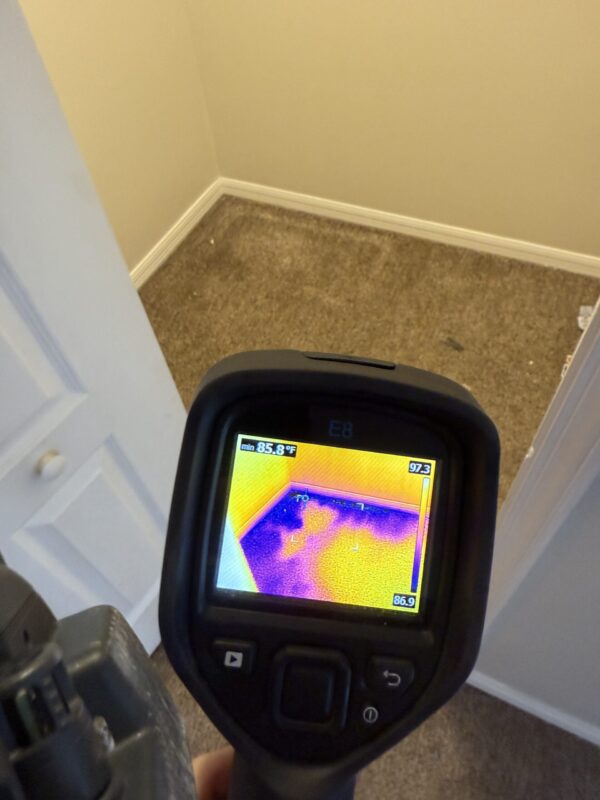
- Thermal Imaging Cameras: Thermal imaging shows temperature differences behind walls, which often correspond with moisture presence. Wet areas tend to appear cooler than the surrounding dry material. This technology allows us to detect hidden mold problems without tearing open large sections of your home.
Using these tools ensures that remediation targets the actual source of the problem rather than just the visible signs of mold. Without proper detection, mold removal efforts can be incomplete or unnecessarily destructive.
Helping clients
Recently, a homeowner in Clearwater contacted us after noticing a persistent musty smell in their living room. There were no visible signs of water damage, and another company had inspected the home, claiming everything looked fine.
Using our thermal imaging equipment, we identified a hidden moisture problem behind an exterior wall caused by a slow window leak. Once we opened the affected wall, mold growth was visible along the drywall and insulation. Because we had pinpointed the exact problem area, we only removed a small section of the wall, repaired the leak, and completed full remediation without disturbing the rest of the room.
This approach saved the homeowner money, minimized disruption, and ensured the mold would not return.
DIY Detection vs Professional Help
Many homeowners try to detect mold themselves using visual inspections, odors, or over-the-counter test kits. While these methods can indicate a potential problem, they cannot accurately locate hidden mold or measure moisture levels behind walls. Professional detection is critical to ensure mold is fully remediated and does not return.
Check out what the EPA has to say when it comes to Hidden Mold.
Why Acting Quickly Matters
Hidden mold spreads over time. The longer it is left untreated, the more extensive the damage can become. Mold can compromise the structural integrity of your walls, affect indoor air quality, and pose serious health risks to you and your family. Acting quickly to detect and remediate mold is the most effective way to protect your home and health.
Mold in Clearwater, St. Petersburg and Tampa Homes
Homes in Clearwater, St. Petersburg and Tampa face unique challenges. The combination of high humidity, aging plumbing, coastal moisture exposure, and frequent storms makes them especially vulnerable to hidden mold growth. Professional detection and remediation are essential to prevent small problems from becoming major repairs.
In Conclusion
Mold behind walls is often invisible, but its effects can be significant. Musty odors, water stains, and health symptoms are warning signs that should not be ignored. The most effective way to address mold is to locate the source of moisture using tools like moisture meters and thermal imaging. Accurate detection allows targeted remediation, reducing costs, preventing unnecessary demolition, and protecting your home and family.
If you suspect hidden mold in your Clearwater, St. Petersburg or Tampa home, don’t wait. Early detection is the key to a safe, healthy, and mold-free home.